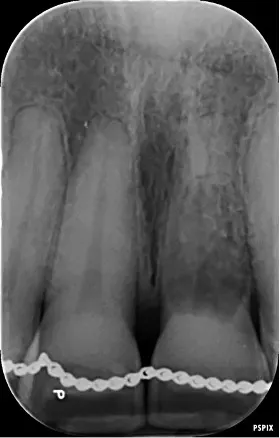

Resorptions are destructive processes that affect the dental tissues and go unnoticed because they cause no pain until very advanced stages. There are different types, the most frequent incidence being in the upper and lower incisors.
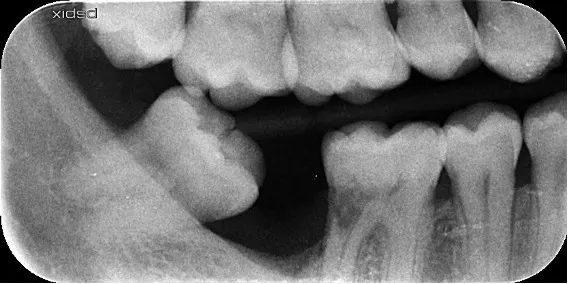
There are many causes that can produce resorptions, such as dental trauma, pulp exposures, cavities and deep fillings, orthodontic movements, periodontal disease, eruption of impacted teeth, cysts, and systemic or idiopathic diseases.
Resorptions are frequently incidental findings during a dental check-up. Early detection favours immediate action so that the situation does not get worse and the tooth’s prognosis is better.
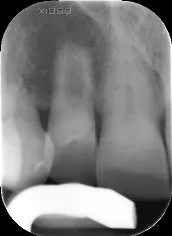
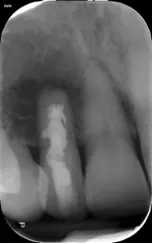
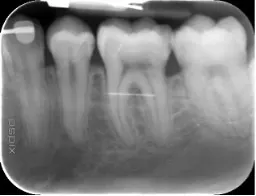
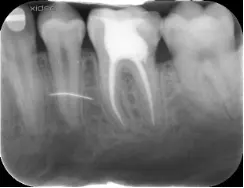
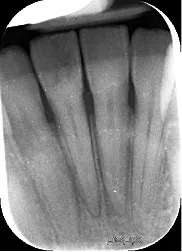
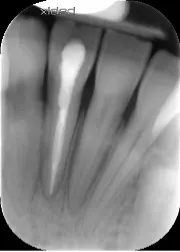
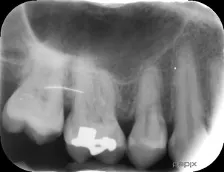
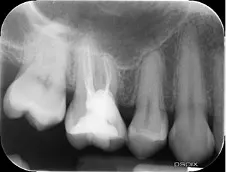
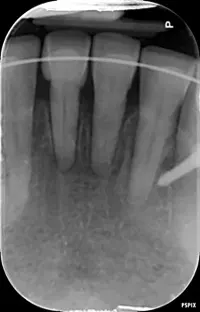
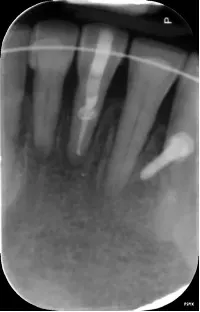
Successfully resolved cases (X-ray before and after)
If detection does not happen at a favourable stage, and the destruction seen on a CBCT (3D imaging) is so extensive, non-conservative treatment will have to be carried out in these cases. (two examples)